
If you’re both autistic and ADHD, chances are you know exactly what I’m talking about: the chaotic tug-of-war between craving routine and rejecting it entirely.
I’ve never coped well with schedules. Free time is a minefield – too much to do, too little focus to do it, and I often end up frozen, doing absolutely nothing. Cue the self-blame spiral: “Why am I so lazy?” (Spoiler: I’m not. And neither are you.)
Here’s the kicker though – I need routine. I need structure. I need to know what’s happening and when. But give me a rigid schedule and I’ll forget it exists by lunchtime and cry because I feel trapped. My executive funcitoning skills were in the bin.
Discovering the Disconnect
Once I discovered I was autistic and ADHD, I started digging into why traditional routines and to-do lists felt so impossible. It turns out, trying to force my brain to work like a neurotypical one was a recipe for failure and burnout. Again. And again.
So I thought: what if I stopped trying to fit my life into someone else’s structure… and started building a flexible one that actually worked for me?
The Game-Changer: A Flexible Framework
One day, I bought myself (yet another) scheduling book. Yes, I’ve got a graveyard of abandoned journals that didn’t survive past week two. But this one was different — it had space for daily priorities, a main focus, and even a gentle timeline.
I made a pact with myself: no strict rules. Just sit with my morning cup of tea, check in with how I’m feeling, and plan only what I can realistically handle.
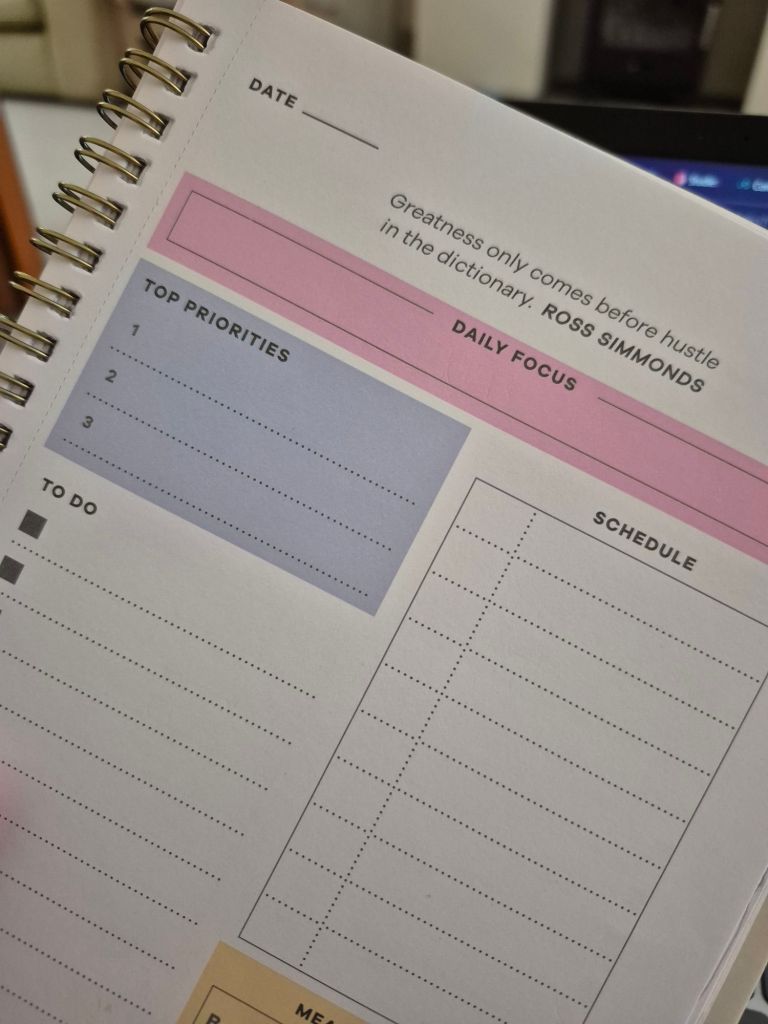
Some days I write fifteen tasks. Other days I write one word: REST. Because recovery is a priority, not a luxury.
Three Months Later…
Shockingly, I’m still using it. This loose-but-consistent approach has been a revelation. I have just enough structure to feel anchored, and enough flexibility to let my ADHD self paint the living room ceiling at lunchtime because that suddenly felt urgent that day.
I choose what feels manageable and motivating that day. I still get things done — just in a way that works for me. I had always believed that I needed to beaver away for 16 hours every day to be productive. It turns out that stepping back and reducing the expectations I place on myself has resulted in finding myself in a far happier and more productive place.
Living With a Brain at Odds
Living in a brain that contradicts itself 24/7 is exhausting. But you can make peace with it. You can stop fighting it and start listening to it.
I never thought I’d say this, but I finally feel calm and in control of my day. And if that sounds impossible right now, please know it’s not. You just need the right kind of support — from yourself, for yourself.
Try a flexible schedule. Ditch the guilt. Trust that you know what you need better than anyone else.

Leave a comment