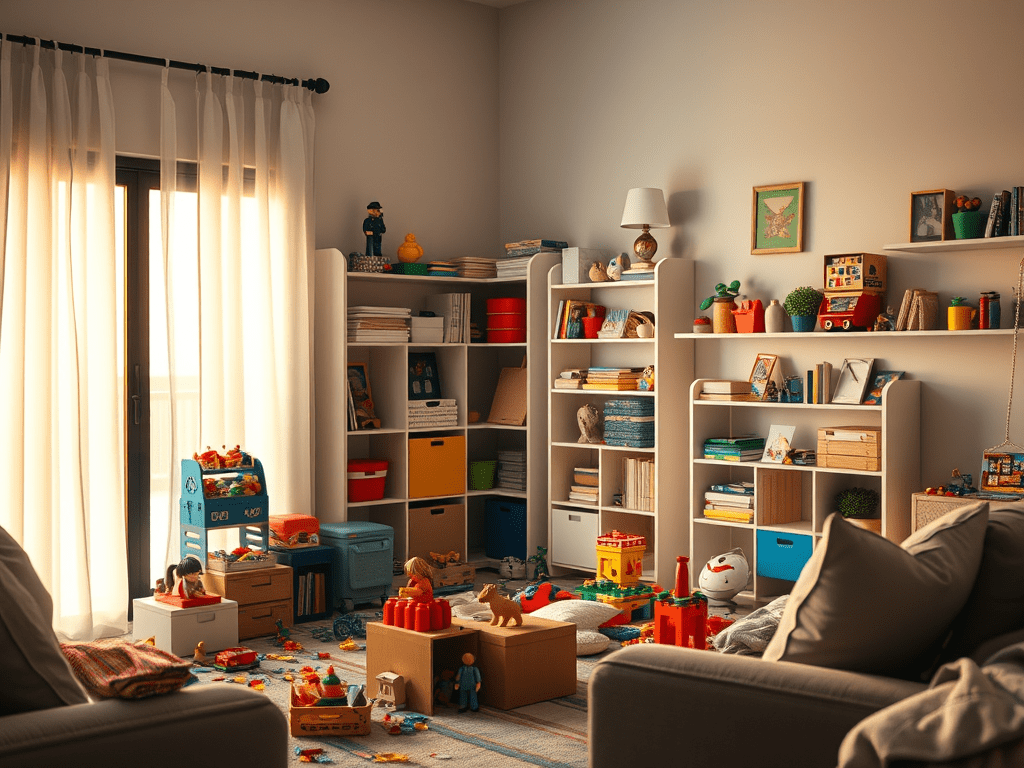
As a parent of autistic children and an autistic adult myself, I’ve had countless “aha!” moments over the years as I’ve recognised traits in my kids that I dismissed or misunderstood in myself as a child. One of the most striking parallels has been the profound need for order and how its absence can lead to a cascade of overwhelm, meltdowns, and, in my case, years of emotional shutdown.
The Playdate Epiphany
I still remember one of the first playdates that turned into a total disaster. My three-year-old was happily playing with a friend when he suddenly burst into inconsolable wailing. The problem? His friend wasn’t playing with a toy “correctly” according to the picture on the box. He was distraught, not out of stubbornness or a refusal to share, but because the idea of breaking the toy’s “rules” and removing it from the “correct” area of the room was completely unprocessable for him.
At the time, it felt like a parenting fail—cutting the playdate short while I calmed my son and reassured the other child’s parent that he wasn’t being difficult on purpose. In retrospect, I see this moment as a critical clue in understanding my son’s needs and, unexpectedly, my own.
My Childhood Need for Order
As a child, I was much the same. I had precise arrangements for my belongings and specific ways of playing that made me feel calm and in control. My LEGO sets weren’t just toys; they were sacred structures that represented peace in an otherwise chaotic household. But in my family, chaos, clutter and a sensory seeking brother with a love of breaking my things was a recipe for disaster. My meltdowns were dismissed as drama, and my needs were viewed as controlling or fussy.
Eventually, I stopped trying to maintain order. The relentless disruption of my space, combined with a lack of support, pushed me into shutdown mode. My room became a mess, my once-beloved hobbies faded into the background, and I spent most of my time emotionally checked out and living in brain fog. In hindsight, I see now that this was my way of coping with the lack of control I felt in every aspect of my life.
How Chaos Followed Me Into Adulthood
Leaving home didn’t magically fix things. Every new living situation brought its own set of challenges, whether it was housemates who dismissed my preferences or partners who found my tidying compulsions irritating. The trauma of my unmet needs had left me unable to identify or articulate what I required to feel calm and functional. Instead, I became what I call a “domestic raccoon,” navigating life in survival mode and shoving my demand for order deep into the shadows. The chaos continued.
Rediscovering My Needs
It wasn’t until I began advocating for my kids’ needs that I started to uncover my own. My son’s insistence on “just so” led me to reflect on how much better I feel in a tidy, uncluttered space. Through therapy and the process of creating an environment where my children could thrive, I realised it was time to prioritise myself too.
One day, I decided to stop ignoring the mess around me. I started small, just clearing the living room floor of toys and then the kitchen worktops. With each area I reclaimed and cleared, I noticed something miraculous: I could think more clearly. My racing thoughts slowed down, my back muscles relaxed for the first time in years, and I went to bed feeling calm instead of overwhelmed.
Standing Firm Against the Chaos
With my newfound clarity came another revelation: I couldn’t go back to the chaos. I quickly learned that when my environment is disrupted, my emotional response is immediate and intense. I’ve had to teach myself—and my family—that these feelings aren’t me being difficult or unreasonable. They’re a biological reaction to my needs being ignored. I even have a safe word that I can screech at the top of my lungs and everyone knows Mummy isn’t mad with them, she just needs to vent for a moment.
After some honest conversations with my husband, we agreed on a new approach. The house is now a shared space where my need for order is respected. Toys are tidied away before bed, shoes go straight onto the rack, and my desk remains a no-clutter zone. These small changes have made a world of difference, not just for me but for the entire family.
The Ripple Effect
The most surprising part? My kids are thriving in this environment too. They’ve taken to putting their toys back in their designated spots and seem to enjoy the predictability and calm of a less cluttered house. By modelling how to advocate for my own needs, I hope I’m teaching them to do the same as they grow up.
A Lifelong Journey
For years, I thought my inability to function in chaos was a personal failing. I believed I was messy, lazy, or just bad at being an adult. Now, I see that my needs are valid, and meeting them isn’t just about making life easier—it’s about survival. Creating a space that allows me to think clearly and feel safe has been nothing short of transformative.
My hope is that by sharing this journey, others—parents of autistic children, autistic adults, or anyone struggling with their environment—might feel empowered to take a step back, reassess, and create a space that supports their mental well-being. Order isn’t about being perfect or controlling; it’s about giving your brain the clarity it needs to thrive. I don’t need the house to be spotless, I just need certain areas to be “just so” in a way that creates a yummy sense that everything is good in the world. It feeds my soul in a way I haven’t felt in 35 years, and I’m so glad it’s back.
Closing Thought
If you’re overwhelmed by your environment, start small. Tidy one drawer or clear off one surface. Pay attention to how it makes you feel. For me, that single carpet cleared of every Hot Wheel and dinosaur was the spark that lit a fire of self-discovery and healing. You might be surprised at what it could do for you too.

Leave a comment